Garden Clearance in Spitalfields

Garden clearance in Spitalfields needs a practical approach, especially where outdoor spaces are compact, shared or tucked behind historic terraces. We clear overgrown borders, cut back unwanted growth, remove garden waste and deal with the awkward items that build up in sheds, corners and paved areas. The aim is straightforward: make the space usable again and leave it ready for the next stage, whether that is simple maintenance, replanting or a more thorough tidy-up.
Our garden clearance work can include bagged green waste, branches, clippings, broken plant supports, old pots, damaged garden furniture and general outdoor clutter. We also handle mixed loads where a garden is being reset after a period of neglect. If you already know the area that needs attention, please send a quick enquiry for a quotation. For a more detailed breakdown of what we do, see our garden clearance service and the wider waste removal page.
Some gardens only need one section opened up again; others need a fuller clearance so that paths, access routes and usable planting areas can be seen properly. We work methodically so that recyclable and reusable materials can be separated from general waste where appropriate. When you want the outdoor space cleared without guesswork, a short note about the items, the surface type and how much access there is will help us prepare an accurate quotation.
What our garden clearance covers
Garden clearance is more than just a quick sweep-up. In many Spitalfields properties, outdoor areas have limited room for storing tools, pots and seasonal items, so the work often starts with sorting through what should stay and what should go. We remove dead planting, windblown debris, rotted timber, unused compost bags and other material that has accumulated over time. Where there are paved courtyards or compact yards, careful handling matters because access can be narrow and surfaces are often shared or delicate.
We also deal with the mixed contents that often sit alongside garden waste. That can mean old watering cans, cracked planters, rusted fixtures, broken trellis sections or other outdoor items that no longer serve a purpose. If you are comparing options, our dedicated garden clearance page explains the core service, while home clearance may be useful when the project extends beyond the outdoor area. Tell us what is there, and we can help you choose the right level of clearance.
Useful details to include with an enquiry are the rough size of the space, whether access is through the property or via an alley, and whether the clearance is mostly green waste or a mixed load. A few clear notes are usually enough to shape a sensible quotation. If you are planning more than one area, it can also help to say whether the garden, shed and side passage should all be dealt with together so nothing is overlooked.
Preparing an outdoor space for reuse

Many customers want a garden cleared so it can be used again without delay. That might mean opening up a seating area, removing old compost and broken containers before fresh planting, or stripping out accumulated waste before landscaping work begins. We approach that kind of clearance as a practical reset: remove the clutter, separate the obvious waste streams and leave the space in a condition that makes the next task easier to start. The result is a cleaner, more workable outdoor area with less to sort through later.
Some jobs are light and straightforward, while others involve more heavily packed areas where items have been left to collect for years. For larger or more varied jobs, it can help to use a page such as garage clearance if the project includes storage outbuildings, or furniture clearance where worn outdoor seating or broken interior pieces are being removed alongside garden waste. If you are unsure which category fits, a plain description of the items is enough for us to advise.
We are careful not to treat every garden as the same. A paved yard with a few loose items requires a different approach from a deeper clearance involving soil-filled pots, timber offcuts and dense green waste. Where possible, the work is planned so that the space can be cleared efficiently and the remaining area left tidy. That practical approach matters when the space is small, shared or simply difficult to navigate.
Handling mixed waste and outdoor clutter
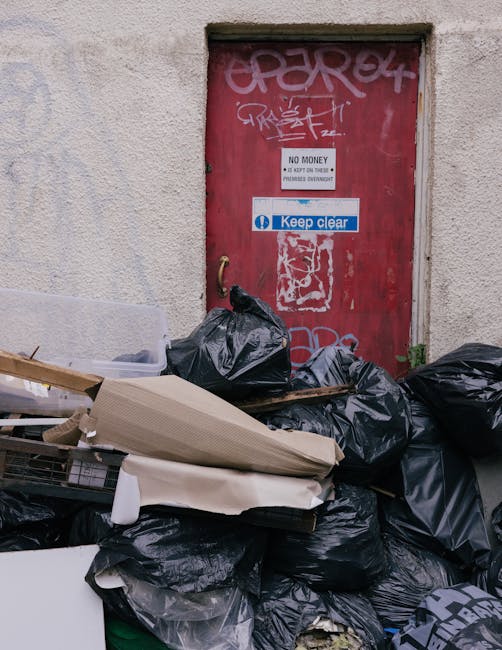
Garden clearances often involve more than plant matter alone. In real properties, the outdoor area may contain a mixture of garden waste, storage items, household clutter and weathered materials that have been left outside for convenience. We can clear mixed loads containing branches, soil, fence panels, plastic pots, broken tools and general outdoor rubbish, keeping the process organised so the space is not made messier during removal. The objective is to clear the load responsibly and leave the area ready for whatever comes next.
Where a job includes broken outdoor furniture, damaged storage items or other larger pieces, it may be sensible to combine the work with a more specific service. Our furniture disposal page is useful when the items are destined to be removed rather than stored, while furniture clearance is relevant if the load includes several bulky pieces that need lifting together. We always aim to match the method to the items, rather than forcing everything into one rigid description.
For customers, the main decision is often whether to clear the visible waste only or to include the less obvious material at the edges, behind planters or inside a shed. A complete clearance can save time later, especially where the space has been used for temporary storage. If you want the whole outdoor area dealt with in one visit, say so clearly when you request a quotation.
When a garden job includes other parts of the property
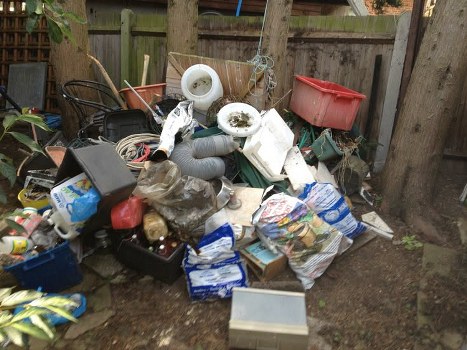
Some projects begin in the garden but extend into adjacent spaces such as lofts, garages, sheds or side returns. That is common where outdoor equipment, old household items and seasonal storage have built up together. In those cases, it is usually more efficient to plan the clearance around the whole load rather than treating each pile separately. Our range includes loft clearance and flat clearance, which may be useful if the same tidy-up includes indoor storage or internal rooms.
We do not assume that a mixed job needs a full property clearance, but it is worth flagging the extras if they are present. A garden can be cleared on its own, yet an adjoining passage, basement access point or storage room may add items that belong in the same visit. That is why a clear item list helps. If the work is simply about the outside area, we keep it focused there; if it is broader, we can plan around the fuller scope without confusion.
Two practical points help most quotations: first, the type of material, because green waste and bulky household items are handled differently; second, the access route, because a narrow passage or internal carry can affect the labour involved. You do not need to write a long explanation. A short, honest summary is enough for us to understand what needs clearing and to prepare a quotation that reflects the real job.
About Spitalfields
Spitalfields lies in the East End of London, just to the east of the City of London, and has long been shaped by movement, trade and layered settlement. Its name is linked to the medieval hospital and priory of St Mary Spital, and the area developed over centuries into a place associated with markets, weaving, migration and reinvention. The streets around Brushfield Street and Commercial Street sit close to one of the city’s best-known historic market districts, while the modern landscape combines older brick terraces, converted buildings and contemporary commercial spaces. The former Spitalfields Market site has become a recognisable urban focus, but the wider district retains a more varied character than a single landmark suggests. The area is also notable for its religious and architectural history. Christ Church, Spitalfields, designed by Nicholas Hawksmoor in the early eighteenth century, stands as one of the district’s most significant buildings and reflects the ambition of the Georgian city. Around it, narrow streets and surviving historic houses speak to the neighbourhood’s long association with Huguenot weavers, later immigrant communities and changing patterns of work. Nearby streets such as Fournier Street preserve a sense of that layered past, where domestic architecture and civic history sit close together. Today, Spitalfields is known for its mix of heritage, independent shops, food, galleries and markets, with Spitalfields Market continuing to draw visitors into an area that remains distinctly urban, busy and historically resonant.
Garden clearance for busy or confined spaces
In built-up parts of Spitalfields, garden work often has to be managed with care because access can be limited and outdoor areas can be unusually compact. That means the clearance itself needs to be tidy, deliberate and well ordered. We remove unwanted material without turning the rest of the property into a second work area, and we pay attention to what can be moved safely through shared passages, tight gates or narrow side access. The goal is to clear efficiently while respecting the layout of the property.
If the space has become cluttered over a long period, it can be helpful to divide the job into visible sections: borders, hard surfaces, sheds, planters and any remaining stored items. This makes it easier to see what is being removed and what stays in place. For customers who also need commercial or mixed premises dealt with, our office clearance and business waste removal pages may be relevant, particularly where outdoor storage spills into a workplace setting. Clear scope at the start keeps the process straightforward.
We can also advise on jobs where the garden contains awkwardly shaped items or heavier outdoor fixtures that need careful lifting. Not every clearance is a simple green-waste load, and not every item can be treated the same way. When you request a quotation, mention anything fragile, oversized or fixed in place so the work can be planned sensibly from the outset.
Pricing factors and quotation details

Garden clearance pricing usually depends on the amount to remove, the type of material and the ease of access. A light tidy of cuttings and loose pots is very different from a full clearance involving overgrowth, timber, soil, broken outdoor furniture and mixed waste. The more accurate the description, the better the quotation can reflect the actual workload. That is why we encourage customers to be specific without feeling they need to write a long message.
The condition of the space can also affect the plan. If items are stacked tightly, hidden behind other waste or spread through several areas, the job may take longer than a simple open-space collection. Where relevant, our pricing and quotes page gives a useful overview, and payment and security may help if you want to understand how administration is handled. For the quotation itself, a short list of the main items and a note about access is usually enough.
It can be useful to think in terms of sections rather than one large blur of clutter. For example: green waste, bulky outdoor items, extra storage pieces and any confined-access areas. That kind of breakdown helps us see whether the job is simple clearance, a mixed-load removal or something closer to a partial property tidy. The clearer the scope, the easier it is to quote fairly.
Garden waste, recycling and responsible disposal
Not every item from a garden belongs in the same stream, which is why responsible disposal matters. Branches, clippings, leaves, timber, plastic containers and metal fixtures may all need to be treated differently depending on their condition and composition. We aim to separate material where practical and to manage removal in a way that keeps the job organised. That approach is especially useful where a clearance includes both plant matter and long-standing outdoor clutter.
Customers sometimes ask whether a clearance should include only the obvious garden waste or also the forgotten items tucked into corners and sheds. The best answer is usually to include everything that affects the use of the space. Our recycling and sustainability page explains the broader approach to handling material, while insurance and safety covers how we think about safe working practices. If you want the outdoor area left ready for the next phase, it often makes sense to remove the whole lot in one go.
That said, a good clearance still depends on sensible sorting. Wet soil, sharp offcuts, broken frames and reusable containers are not all handled in the same way, so the job is planned around the material present. If there are any items you definitely want to keep, set those aside before the collection is arranged. It is a small step, but it can make the handover smoother and the final result more precise.
Requesting a quotation

When you are ready to arrange garden clearance in Spitalfields, the simplest way to request a quotation is to describe the space, the main items and any access details that may matter. We can work from a concise summary and then refine the scope if needed. If the project is part of a larger property tidy, say which areas are included so the quotation can cover the correct work rather than just a fragment of it.
Useful information includes whether the clearance is mostly green waste, whether bulky items are involved, and whether the work will need to pass through indoor areas or shared access. If you would like to compare related services, house clearance may suit broader domestic projects, while builders waste clearance may be appropriate where garden work follows renovation or construction. Send the details that matter most, and we will use them to prepare a clear quotation.
For the best result, keep the message practical: what needs removing, how much there is and how easy it is to reach. If you are unsure whether something should be classed as garden waste, mixed waste or a larger clearance job, just describe it plainly. We can then help determine the right approach and move the process forward without unnecessary back and forth.