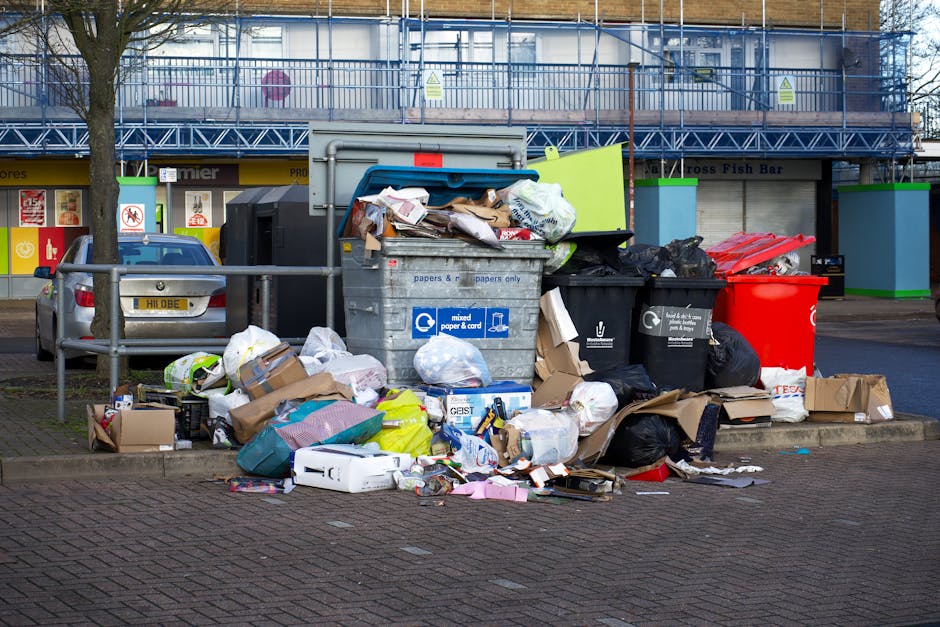
E1 postcode bulky rubbish removal tips for Spitalfields flats
If you live in a Spitalfields flat, you already know the awkward bits: tight stairwells, limited lift access, noisy neighbours, and nowhere to leave a sofa without blocking the hall. That is exactly why E1 postcode bulky rubbish removal tips for Spitalfields flats need to be practical, local, and realistic. This guide breaks down how to plan a smooth clearance, what to avoid, how to protect your building, and when a professional service makes the whole job feel far less stressful.
Whether you are shifting one heavy item or clearing several rooms after a move, the aim is simple: get bulky waste out safely, legally, and without turning your flat into a temporary warehouse. Let's face it, nobody wants a wardrobe leaning against the kitchen door for three days.
Table of Contents
- Why E1 postcode bulky rubbish removal tips for Spitalfields flats Matters
- How E1 postcode bulky rubbish removal tips for Spitalfields flats Works
- Key Benefits and Practical Advantages
- Who This Is For and When It Makes Sense
- Step-by-Step Guidance
- Expert Tips for Better Results
- Common Mistakes to Avoid
- Tools, Resources and Recommendations
- Law, Compliance, Standards, or Best Practice
- Options, Methods, or Comparison Table
- Case Study or Real-World Example
- Practical Checklist
- Conclusion
- Frequently Asked Questions
Why E1 postcode bulky rubbish removal tips for Spitalfields flats Matters
Bulky rubbish removal is not just about making a space look tidy. In Spitalfields, it often affects access, safety, building rules, neighbour relations, and how quickly you can return to normal life. Flats in the E1 postcode can come with narrow communal corridors, shared entrances, awkward corners, and a steady stream of foot traffic. A bulky item left in the wrong place can become a nuisance very quickly.
There is also a practical side people sometimes miss. Large items are harder to move once they are stripped from a room and laid on the floor. A mattress can bend in one hallway and jam in another. A broken desk can shed screws across a stairwell. A pile of old chairs can block the route for everyone else. Suddenly, a simple clear-out has turned into a tiny building-wide drama.
Good planning matters because flat living changes the rules. Unlike a house, you do not usually have a driveway, side access, or a shed to stage items. You need to think about lift size, parking access, carry distance, and how much disturbance your clearance might create. That is why a local approach works better than a one-size-fits-all mindset.
If your clearance includes mixed household items, it can help to think beyond the immediate job and look at the wider home. In some cases, a visit to flat clearance or even broader home clearance information can give you a better sense of how the process is usually handled. If furniture is the biggest issue, then furniture disposal guidance is often more relevant than general waste advice.
How E1 postcode bulky rubbish removal tips for Spitalfields flats Works
At a basic level, bulky rubbish removal means collecting items that are too large, awkward, or heavy for regular bin collections. In flat settings, that usually includes sofas, wardrobes, beds, mattresses, tables, broken shelving, white goods, and the odd item that has somehow been stored behind a door for years. You know the one.
The process usually works best when you break it into clear stages: identify what is going, check access, separate reusable items where possible, and decide how the waste will leave the property. If your building has restrictions on loading, lift use, or communal area protection, those need to be planned first. It sounds obvious, but people often skip this part and then wonder why the whole thing feels chaotic by lunchtime.
For larger clear-outs, many people also consider whether the work is really just waste removal or something broader. For example, if the job includes dismantling, sorting, and removal of several furniture pieces, then a service such as furniture clearance may fit better than handling it item by item. If the items are mainly general household waste, waste removal is the simpler route.
In practical terms, the cleaner the planning, the quicker the job. A well-organised removal can often be done in one visit with less noise, less back-and-forth, and fewer complaints from the flat next door. That is the goal.
Key Benefits and Practical Advantages
When bulky rubbish is handled well, the benefit is not just a cleaner room. It makes the whole flat more liveable, easier to decorate, and simpler to move through. In a compact Spitalfields property, that extra bit of space can feel surprisingly big.
- Safer rooms and hallways: less tripping risk, fewer sharp edges, and fewer items stacked precariously.
- Better use of space: you can actually open cupboards, reach windows, and move furniture without a mini obstacle course.
- Less stress on moving day: the fewer items left behind, the less pressure at the end.
- Cleaner shared areas: neighbours and building managers tend to appreciate clear hallways and tidy exits.
- More efficient sorting: recyclable, reusable, and disposable items are easier to separate when the job is planned properly.
There is also a mental benefit that people underestimate. A flat feels different once the bulky stuff has gone. Rooms sound less cluttered. You notice the light again. Even a small lounge can feel calmer with one old armchair gone, honestly.
If you are comparing service types, it can also be useful to think about overlap. A flat that contains old chairs, broken cabinets, and a few miscellaneous items may be better suited to a broader house clearance or home clearance approach, even if it is technically an apartment. The right fit depends on the amount, not just the postcode.
Who This Is For and When It Makes Sense
This kind of removal helps a wide range of people in E1. The obvious ones are tenants moving out, landlords preparing a property, and homeowners replacing worn-out furniture. But the real list is broader than that.
You may need bulky rubbish removal if:
- you are downsizing and cannot keep large furniture pieces;
- you have inherited a flat with old items left behind;
- you are refurbishing and need space before trades arrive;
- you manage a rental and need the property turned around quickly;
- your building has a strict stance on leaving items in communal areas;
- you simply want to reclaim a spare room that has become a storage cave.
It also makes sense when the items are too awkward for a standard bin lift. A broken bed base can be split down. A wardrobe can be taken apart. But if the job starts to require tools, carry help, parking planning, and some patience, you are already in bulky waste territory.
One thing we see fairly often: people wait until the last minute because the item is "only one sofa". Then the sofa does not fit through the corridor, the lift is small, and the day gets longer. If that sounds familiar, you are not alone.
Step-by-Step Guidance
Here is a simple, workable process for handling bulky rubbish in a Spitalfields flat without overcomplicating things.
- List everything that needs to go. Walk through the flat and note every bulky item, even the half-broken ones in cupboards or balconies.
- Measure the awkward pieces. Check width, height, and depth against doorways, stair turns, and lift space. A tape measure saves arguments later.
- Decide what can be reused, donated, recycled, or disposed of. Not everything bulky is waste. Some items have a second life if they are in decent shape.
- Check building access rules. Look at booking requirements, lift protection, loading times, and whether items can be left outside for collection.
- Dismantle if needed. Beds, tables, and wardrobes are often easier to remove in parts. Keep screws and fittings in a labelled bag, not floating around in a drawer somewhere.
- Protect floors and walls. Use blankets, cardboard, or covers if items have rough edges or sharp feet.
- Clear a route before moving day. Hallways, doors, and the entrance should be free of bins, bikes, and stray shopping bags.
- Load with weight and shape in mind. Heavy pieces should go first, but only if the route is safe and the item is manageable.
- Separate the waste correctly. Mixed waste, furniture, and construction debris should not be thrown together unless the service is set up for that.
- Confirm the final sweep. Check behind sofas, on balconies, and in cupboards. People always find one extra item. Always.
If the bulk of your load is damaged furniture, you may find it helpful to compare furniture clearance with furniture disposal. The first is often more useful when several items are leaving at once; the second can be better when you are dealing with a specific piece or two.
Quick planning example
Imagine a second-floor flat with a sofa, broken bookcase, old mattress, and a dining chair set that has seen better days. The best order is usually: measure, check lift size, dismantle the bookcase, wrap corners, clear the route, then remove the mattress and sofa first because they are the most awkward. That keeps the lift and hallway moves to a minimum. Simple, but effective.
Expert Tips for Better Results
The difference between a smooth clearance and a frustrating one is often found in the small details. In our experience, these are the bits that save time and reduce hassle.
- Take photos before you start. This helps with planning and gives you a clear visual record of what needs to go.
- Book the right time of day. Mid-morning or early afternoon can be easier than the rush around school drop-off or evening deliveries.
- Keep building noise in mind. Tapping, dragging, and door propping can echo in flats. A little courtesy goes a long way.
- Label items that must stay. A plain paper tag on a chair leg can prevent a costly mistake.
- Group items by exit route. Put the hardest pieces closest to the route out, if space allows.
- Use proper lifting technique. Bend the knees, keep loads close, and do not twist sharply while carrying. Your back will thank you later.
Here is a small but useful tip: remove drawers from wardrobes before moving them. It makes the item lighter, easier to grip, and less likely to swing oddly around a corner. People often forget this and then spend ten extra minutes wondering why the wardrobe suddenly feels alive.
Also, think about recycling before disposal. If your load includes mixed materials, a responsible contractor should separate what can be diverted from general waste. You can read more about recycling and sustainability if reducing waste matters to you, which it probably does if you live in a compact urban area where storage space is at a premium.
Common Mistakes to Avoid
Bulky rubbish removal is one of those jobs that looks easier than it is. A few common mistakes keep turning up in flats across E1.
- Blocking shared hallways: even briefly, this can upset neighbours and create safety issues.
- Assuming the lift will take everything: lifts are rarely as generous as you hope.
- Leaving heavy lifting for one person: this is how items get damaged, and people get hurt.
- Skipping sorting: mixing everything together makes disposal less efficient and can create avoidable waste.
- Ignoring building instructions: some blocks require advance notice or specific handling arrangements.
- Forgetting awkward accessories: bed slats, table legs, wall brackets, and box springs often end up left behind.
Another easy mistake is booking too late. If your move-out date, refurbishment start, or inspection date is fixed, do not leave removal until the last minute. It is a very human habit, to be fair, but it makes the whole thing harder than necessary.
And yes, one more: do not guess the item size. Guessing is what gets people stuck halfway through a doorway with a wardrobe that has become suddenly, inexplicably larger.
Tools, Resources and Recommendations
You do not need a huge toolkit, but a few basics make a bulky rubbish job far easier.
- Tape measure: for doors, lifts, furniture, and corner clearances.
- Gloves: useful for grip and for handling dusty or rough surfaces.
- Furniture sliders or blankets: helpful on hardwood, tile, or polished floors.
- Basic screwdriver or Allen key set: ideal for dismantling beds and flat-pack furniture.
- Strong bags or boxes: good for loose fixings, cushions, small fittings, and mixed bits.
- Marker pen and labels: surprisingly handy if you are separating items for keep, donate, or dispose.
For many flat owners, the biggest resource is a reliable plan. That may mean using a specialist rather than trying to manage the whole job alone. If you need a broader property clear-out, services such as flat clearance or home clearance can be useful to compare because they fit different scales of work. If you are dealing with waste from repairs or refurbishment, builders waste clearance may be the better match.
For peace of mind, it is also wise to review operational details such as insurance and safety and the company's health and safety policy. That may sound a bit formal, but when items are being carried through shared spaces, it genuinely matters.
Law, Compliance, Standards, or Best Practice
Bulky rubbish removal in London should always be handled responsibly. The main principle is straightforward: waste must not be fly-tipped, dumped in communal areas, or left where it creates a hazard. If you are using a clearance service, it should operate in line with UK waste handling expectations and take reasonable steps to dispose of items properly.
For residents, the practical best practice is simple: do not leave bulky items in the street unless a collection arrangement clearly allows it, and do not assume a neighbour or caretaker will move them for you. In flat blocks, shared responsibility can get blurry very fast, so it is better to confirm who is actually handling the removal.
If a service is involved, a careful customer should also check basics such as payment security, written terms, and complaint handling. These do not sound exciting, no, but they are part of a trustworthy service. You can review payment and security, terms and conditions, and the complaints procedure if you want to understand the customer journey more clearly.
Best practice also means thinking about data and access responsibly. If anyone needs to enter your flat or building, they should do so with proper permission and only for the job at hand. It sounds obvious, but clarity avoids awkwardness later.
Options, Methods, or Comparison Table
There is no single best method for every Spitalfields flat. The right option depends on the size of the items, the access, and how much help you want to take on yourself.
| Method | Best for | Pros | Drawbacks |
|---|---|---|---|
| Self-removal | One or two manageable items | Low cost, flexible timing | Heavy lifting, access issues, higher risk of damage |
| Flat clearance service | Several items or whole-room clearances | Less stress, faster, more organised | Usually costs more than doing it yourself |
| Furniture-specific removal | Sofas, beds, wardrobes, tables | Good for bulky household pieces | Less suitable for mixed waste loads |
| Broader waste removal | Mixed rubbish, bagged waste, general clutter | Convenient for varied loads | May be less tailored to delicate or awkward furniture |
| Builders waste clearance | Refurbishment and renovation debris | Handles heavier repair-related waste well | Not ideal for normal household furniture |
If you are unsure, choose the method that matches the biggest problem rather than the smallest item. That saves a lot of backtracking. A sofa and a few bags of waste can still be a furniture-led job if the sofa is the real obstacle.
Case Study or Real-World Example
Here is a simple real-world style example from a typical E1 flat scenario.
A couple living in a two-bedroom flat near Spitalfields were getting ready to redecorate before guests arrived later in the month. The problem was not the paint, oddly enough. It was the old furniture. A heavy wardrobe had been sitting in the spare room for years, the mattress had lost its shape, and the living room still held a cracked coffee table and two dining chairs that wobbled badly on the floorboards.
At first, they considered doing it themselves over a weekend. Then they measured the hallway. The wardrobe would not turn cleanly without dismantling, the lift was too narrow to be useful, and the stairwell had a bend halfway down. So they sorted the load by item size, removed loose fittings, protected the flooring, and planned the exit route before anything was lifted. The job became calmer straight away.
The useful lesson? In flats, the item is only part of the equation. The route matters just as much. Once they treated access as the main challenge, the rest of the clearance made sense. A bit unglamorous, maybe, but very effective.
They also found that separating reusable pieces from disposal items reduced what had to be carried out at once. That small decision saved time and made the flat feel less crowded before the decorators even arrived. Funny how that works.
Practical Checklist
Use this checklist before you start bulky rubbish removal in a Spitalfields flat:
- Identify every bulky item that needs to go.
- Measure doors, lifts, hallways, and the largest furniture pieces.
- Check building rules, booking requirements, and access times.
- Decide what can be reused, recycled, or disposed of.
- Dismantle furniture where possible and store fixings safely.
- Protect floors, walls, and corners.
- Clear the route to the exit.
- Confirm parking or loading arrangements if needed.
- Keep neighbours informed if the removal may be noisy or disruptive.
- Do a final walk-through so nothing is left behind.
Expert summary: In E1 flats, successful bulky rubbish removal is mostly about planning the route, not just lifting the item. Measure first, move second, and sort waste as you go.
If you are looking at a bigger mixed-property job, it may help to compare related options such as loft clearance, garage clearance, or even office clearance if the waste is coming from a work-from-home setup. The right service should match the space, not just the item.
Get a free quote today and see how much you can save.
Conclusion
Bulky rubbish removal in Spitalfields flats does not need to be a headache. With the right measurements, sensible sorting, and a clear understanding of building access, even awkward items can be removed without chaos. The key is to plan for the realities of flat living: shared spaces, narrow routes, and a limited margin for mistakes.
If you are dealing with a one-off item, a small furniture set, or a larger flat clear-out, the same principles apply. Prepare first, move carefully, and keep an eye on what can be reused or recycled. That way, the job gets done properly and the flat feels lighter afterwards. A bit of order goes a long way, really.
And when the last bulky item is finally gone, there is always that nice moment of quiet. The room looks bigger. The air feels easier. Not a bad result for one day's work.
For a more tailored approach, you can also explore the company's about us page to understand how the service is run, or contact us when you are ready to discuss your clearance needs.
Frequently Asked Questions
What counts as bulky rubbish in a Spitalfields flat?
Bulky rubbish usually means items that are too large or awkward for normal bin collection, such as sofas, beds, wardrobes, mattresses, tables, and broken shelving. In flats, the main issue is often not just size but how difficult the item is to move through corridors and stairs.
Do I need to dismantle furniture before removal?
Not always, but it often helps. Flat-pack furniture, bed frames, and wardrobes are much easier to move in pieces. If access is tight, dismantling can save time and reduce the risk of damage to walls and door frames.
Can bulky items be left in communal areas before collection?
Usually, no. Shared hallways and entrances should stay clear unless there is a specific arrangement in place. Leaving items there can block access and create safety problems for neighbours and building staff.
How do I know whether I need flat clearance or furniture disposal?
If you are removing several items from a whole flat or multiple rooms, flat clearance is often more suitable. If the job is mainly sofas, chairs, beds, or tables, furniture disposal may be the better fit.
What should I measure before booking a removal?
Measure the widest and tallest parts of the bulky items, plus doorways, stair turns, and lift openings. In flat buildings, a piece can be only slightly too large and still become a major problem on the day.
Is bulky rubbish removal in E1 suitable for landlords?
Yes. It is often used by landlords and letting agents after a tenancy ends, especially when furniture or mixed waste has been left behind. The key is to clear the property efficiently so it can be prepared for the next occupier.
What happens if the items are damaged or partly broken?
That is usually fine. Broken furniture, worn mattresses, and damaged cabinets are common bulky waste items. The main concern is how safely they can be handled and whether any sharp or loose parts need extra care.
How can I reduce the amount of bulky waste I throw away?
Sort items before the clearance and separate anything reusable or recyclable. Some furniture may still have life left in it, while mixed waste can often be reduced by dismantling and grouping materials properly.
What if my flat has no lift?
That is very common in older E1 buildings. It does not stop a clearance, but it does make planning more important. Stair width, turns, and carry distance all need to be considered before the job begins.
How far in advance should I arrange bulky rubbish removal?
As soon as you know the move-out date, refurbishment date, or collection need. Leaving it late is the easiest way to create stress, especially if the flat has awkward access or several items to remove.
Can bulky waste removal help with mixed household clutter too?
Yes, provided the service is set up for mixed items. If you have bags, furniture, and other clutter together, a broader waste removal or home clearance approach may be more suitable than a single-item collection.
What should I check before choosing a clearance company?
Look at safety, insurance, payment security, and the company's terms. It is also sensible to understand how complaints are handled and whether the provider explains recycling and waste handling clearly. Those are the details that tend to matter after the shiny sales chat is over.
For more background on company standards and customer care, you may also find insurance and safety and recycling and sustainability helpful to review.