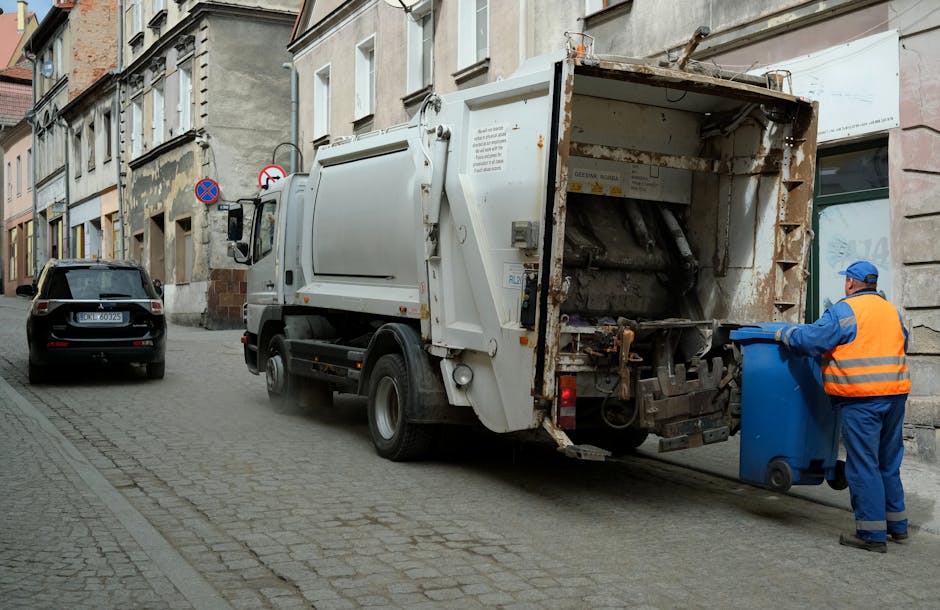
Avoid hidden charges in Spitalfields rubbish removal quotes
If you have ever compared rubbish removal quotes and thought, "Why does this one look cheap until the very end?", you are not alone. Hidden extras can turn a tidy-looking quote into a surprisingly expensive job, especially in a busy area like Spitalfields where access, parking, stairs and loading time can all affect the final bill. The good news is that you can usually spot the warning signs early if you know what to ask, what to check, and what a proper quote should include.
This guide breaks down how to avoid hidden charges in Spitalfields rubbish removal quotes without getting lost in jargon. You will learn what should be included, where costs are commonly added, how to compare providers fairly, and how to protect yourself before anyone lifts a single bag. A small bit of care upfront can save a lot of hassle later. And yes, sometimes the smallest line in the quote is the one that matters most.
Contents
- Why it matters
- How rubbish removal quotes work
- Key benefits and practical advantages
- Who this is for
- Step-by-step guidance
- Expert tips
- Common mistakes to avoid
- Tools, resources and recommendations
- Law, compliance, standards, or best practice
- Options, methods, or comparison table
- Case study or real-world example
- Practical checklist
- Conclusion
- Frequently asked questions
Why Avoid hidden charges in Spitalfields rubbish removal quotes Matters
Hidden charges are more than an annoyance. They make it difficult to budget, compare providers, and decide whether a service is actually good value. In rubbish removal, the headline price is often only part of the picture. Extras can appear for labour, access, congestion, waiting time, sorting, heavy items, parking issues, or disposal of certain materials.
In Spitalfields, this matters even more because the local setup can be a little unforgiving. Narrow streets, shared entrances, upper-floor flats, loading restrictions, and limited parking can all be relevant. A quote that looks attractive online may suddenly change once a team sees a basement storage room, a tight stairwell, or a van that cannot park right outside. To be fair, some of those issues are legitimate cost factors. The problem is when they are not explained clearly from the start.
If you are clearing a flat, office, garage, loft or garden area, a vague quote can lead to a lot of back-and-forth on the day. That is stressful, especially if you are trying to meet a move-out deadline or get a property ready for sale. Clear pricing is not just about money; it gives you confidence and cuts down the drama. And let's face it, nobody needs extra drama from a pile of old junk.
A useful place to start is understanding a provider's overall pricing approach. A transparent page like pricing and quotes should make it easier to see whether the business explains its costs in plain English. That's the standard you want.
How Avoid hidden charges in Spitalfields rubbish removal quotes Works
At a basic level, a rubbish removal quote should estimate the total cost of collecting, loading, transporting and disposing of your waste. The better providers will ask enough questions to narrow down the price before arrival. The weaker ones may offer a catchy starting figure and then add on charges later.
Here is how a sensible quoting process usually works:
- You describe the waste. This includes type, approximate volume, access, and whether there are any awkward items.
- The provider estimates labour and vehicle size. The number of people, van capacity, and how long the job takes all influence the quote.
- Disposal costs are considered. Different waste streams can be priced differently, especially if sorting or special handling is needed.
- Access and logistics are checked. Stairs, long carries, parking, and loading distance can matter a lot in central London settings.
- The final quote is confirmed. Ideally, you receive a clear explanation of what is included and what might change it.
A good quote should not feel like a puzzle. If it does, slow down. Ask for clarity before booking. One brief phone call can save a surprisingly annoying surprise later on.
For some jobs, you may want to compare different service types too. For example, a household declutter may suit a home clearance, while larger property removals may be more similar to a full house clearance. Matching the job to the service is one of the easiest ways to avoid mismatched pricing.
Key Benefits and Practical Advantages
Being strict about quote transparency has some very real upsides. The first is obvious: you pay a fairer price. But the benefits go further than that.
- Better budgeting: You know roughly what the job will cost before you commit.
- Less stress on the day: No awkward surprise when the crew arrives.
- Faster decision-making: Clear quotes are easier to compare side by side.
- Fewer disputes: If everything is written down, there is less room for argument.
- Better service fit: A transparent quote often reflects a more organised business overall.
There is also a trust benefit. A company that explains pricing clearly is usually more comfortable being accountable for what it charges. That does not automatically mean every transparent provider is the cheapest, of course. But you are paying for clarity as much as for collection. In practice, clarity is worth a lot.
If you are dealing with old sofas, worn-out wardrobes, or a mixed load of furniture and household waste, it can help to review the relevant service pages first, such as furniture clearance and furniture disposal. That helps you understand whether the item type might affect the price.
Who This Is For and When It Makes Sense
This advice is useful for just about anyone arranging rubbish removal in Spitalfields, but a few groups need it especially.
Homeowners and tenants
If you are moving, renovating, or clearing out years of stored items, the risk of hidden extras is higher because the job often looks simpler than it really is. A couple of bags may become a van-load once the cupboard doors open. Happens all the time.
Landlords and letting agents
End-of-tenancy clearances need tidy pricing because timelines are tight. If a provider changes the bill after arrival, it can throw off handover schedules and eat into margins.
Flat owners and residents
Flats often come with stairs, shared entrances, controlled access, or awkward parking. If you are arranging a flat clearance, ask upfront whether those access factors are included in the quote.
Businesses and office managers
Office jobs often involve mixed waste, desks, chairs, IT equipment, and time-sensitive access. If you are booking office clearance or wider business waste removal, transparency matters because even small pricing changes can affect budgets across the month.
Builders and trades
With construction waste, the quote may change if the load includes heavier rubble, plasterboard, or material that needs separating. A relevant page such as builders waste clearance is worth reviewing before you book.
In short, this is for anyone who wants a straight answer before the van turns up. Which is most people, really.
Step-by-Step Guidance
If you want to avoid hidden charges, use a simple process. It does not have to be complicated.
- List exactly what needs removing. Write down the main items, bags, and any bulky or heavy objects. If there is a mix of waste types, say so.
- Estimate the volume honestly. A rough "half a van" or "full van" estimate is useful, but only if it is realistic. Overestimating can waste money. Underestimating creates awkward revisions.
- Describe access in detail. Mention stairs, lifts, basement access, limited parking, narrow hallways, or long carry distances. These small details can make a big difference in London.
- Ask what the quote includes. Does it cover labour, loading, disposal, congestion time, parking, and VAT if applicable? If not, what is extra?
- Ask about excluded items. Some materials may need special handling. Ask before booking, not after the team arrives.
- Request a written confirmation. Even a short email or message summarising the price and what is included can help prevent confusion.
- Check the terms before paying. The fine print should be clear enough for a normal person to follow. If it is not, that tells you something.
- Compare more than just the headline figure. A slightly higher quote that is fully inclusive may be better value than a low starting price with several add-ons.
A small but useful habit: take photos of the waste before the booking. A few pictures from different angles can help the provider estimate more accurately. It is a boring little step, but it saves headaches. Every time.
If you are dealing with a loft, garage or awkward storage area, be especially precise. Services like loft clearance and garage clearance often uncover hidden volume once items start moving. A quote based on a quick glance in the doorway can be way off.
Expert Tips for Better Results
Here are the habits that tend to make the biggest difference in real life.
- Be exact about access, not just waste type. A clear staircase can be easier than a lift that cannot take bulky items. Describe both.
- Ask whether the quote is "all in". That phrase should have a plain meaning. If it does not, ask for one.
- Watch for vague wording. Phrases like "subject to inspection" are not always bad, but they should be backed by a clear explanation of what could change.
- Separate "estimated" from "fixed". An estimate is not the same thing as a fixed-price booking. Know which one you have.
- Check whether special waste has a different rate. Some materials may require sorting or extra disposal steps.
- Confirm the time window. If a team has to wait because of access or parking, will that affect the price?
- Keep communication in one place. Email or message threads are easier to refer back to than a handful of half-remembered phone calls.
If you want a calmer experience, choose companies that seem comfortable explaining themselves. It sounds obvious, but honestly, that is usually the strongest signal. A well-run provider often has a well-run quote process too.
For customers who value transparency and service detail, it can also help to learn more about the business itself via about us and its approach to recycling and sustainability. That is not about price alone, but it does tell you a lot about how the company thinks.
Common Mistakes to Avoid
Most quote problems are avoidable. The trouble is that people often rush the booking because they want the mess gone now. Fair enough. Still, the same few mistakes keep happening.
- Choosing the cheapest headline price without checking the details. This is the big one.
- Hiding access problems. If the van cannot park close by or the waste is on the fourth floor, say so.
- Not asking about minimum charges. Small jobs can still have a base fee.
- Assuming every provider prices the same way. They do not.
- Forgetting to mention heavy or awkward items. A mattress is not the same as a bag of clothes. Neither is a broken wardrobe the same as a few old magazines.
- Skipping the written confirmation. Memory is unreliable when you are juggling removals, keys, and a hundred other things.
- Ignoring terms and payment details. This can lead to confusion about when payment is due and what triggers extra costs.
A particularly common one: people book a "small clearance" and then add items on the day. Sometimes that is unavoidable, but if the volume changes a lot, the quote may too. That is not always a bad thing, just something to understand before the team arrives with a van and a timetable.
Tools, Resources and Recommendations
You do not need specialist software to avoid hidden charges. A few simple tools and habits are enough.
- Phone photos: Take wide shots of the room, not just close-ups of the waste.
- A written inventory: List large items, bag counts, and anything potentially heavy.
- A basic tape measure: Helpful for wardrobes, sofas, or items that need moving through tight spaces.
- Building or access notes: Write down lift size, floor level, and any entry restrictions.
- Your quote summary: Keep the final price and what it includes in one place.
On the website, the most useful supporting pages for pricing transparency are pricing and quotes, payment and security, and terms and conditions. Those are worth reviewing before you agree to anything, especially if the job is not straightforward.
If you are unsure which service fits your waste, the main waste removal page can help frame the conversation. For more niche jobs, a targeted service page often gives a better idea of what may be included.
Law, Compliance, Standards, or Best Practice
Pricing transparency is not only a customer-service issue; it is also a best-practice issue. In the UK waste sector, reputable operators are expected to handle waste responsibly, provide clear terms, and avoid misleading pricing. You do not need to be a legal expert to ask for clarity, but you should expect honest descriptions of the service and the conditions that affect cost.
From a practical point of view, there are a few standards worth applying:
- Clear pricing language: The quote should explain what is included and what is not.
- Fair description of service scope: The provider should not imply a small job is fixed-price if it clearly depends on access or volume.
- Responsible handling of waste: Disposal should be done through proper channels, not dumped somewhere inconvenient for everyone else. You really do not want to be involved in that mess.
- Secure payment practices: The process should feel orderly, with no pressure to pay in unusual ways.
For peace of mind, it is sensible to check a provider's policies, including health and safety policy, insurance and safety, and complaints procedure. Those pages do not just look good; they show how a business handles problems when they arise. And yes, problems sometimes arise. That is normal. What matters is how they are handled.
In some situations, extra care is needed for business premises, shared buildings, or more complex clearances. That is where a clear quote and a sensible service agreement matter most. No one wants a surprise invoice landing after the dust has settled.
Options, Methods, or Comparison Table
Not every quote works the same way. Here is a simple comparison of common quoting methods and what to watch for.
| Quote type | How it works | Strengths | Possible risk |
|---|---|---|---|
| Fixed quote | The price is agreed in advance based on the details provided. | Easy to budget, low uncertainty. | May change only if the job description was incomplete. |
| Estimated quote | A likely price is given, then adjusted if the real job differs. | Useful for jobs with unknown access or volume. | Can lead to price changes on the day. |
| Load-based quote | The price depends on how much space the waste takes up in the vehicle. | Simple for mixed household waste. | Harder to predict if items are bulky or oddly shaped. |
| Hourly quote | You pay based on labour time. | Can suit very small or simple jobs. | Delays, parking and access issues may increase the cost. |
If your priority is to avoid hidden charges in Spitalfields rubbish removal quotes, a fixed or clearly explained inclusive quote is usually the easiest to manage. That said, a good estimate can still work well if the provider has asked the right questions and been honest about what might affect the final price.
There is no magic formula here. The best option is the one that matches the job and is explained properly. Pretty simple, really.
Case Study or Real-World Example
Imagine a resident in Spitalfields clearing a one-bedroom flat after a move. On the surface, it looks straightforward: a sofa, a bed frame, a few chairs, and several bags of mixed household bits. The first quote looks attractive because it is low. But once the provider asks a few more questions, the picture changes.
The flat is on the third floor. The lift is too small for the bed frame. There is limited parking, and the nearest loading point is not directly outside. Suddenly, the job takes longer and needs more labour than expected. A transparent provider would explain that up front and adjust the quote before booking. A less careful provider might wait until arrival and then add a surprise fee.
That is the difference the whole article comes down to. Not every extra charge is "hidden" in a dishonest sense. Some are just poorly explained. But if you ask the right questions early, you can usually tell which sort of quote you are dealing with.
In another common scenario, a small business clears an office storage room and adds a couple of broken desks to the list. If the company has already discussed access, disposal requirements, and any likely extras, the final bill is much easier to accept. No tension, no last-minute debate in the doorway.
Practical Checklist
Use this checklist before you confirm a booking.
- Have I described every item or waste type honestly?
- Have I explained access, stairs, parking, and loading distance?
- Do I know whether the quote is fixed, estimated, or load-based?
- Have I asked what the price includes?
- Have I asked what could increase the cost?
- Have I checked for excluded or special items?
- Do I have the quote in writing?
- Have I reviewed the terms and payment information?
- Do the service pages match the job I need done?
- Am I comfortable that the provider has explained things clearly?
If you can answer yes to most of those, you are in a much stronger position. If not, pause and ask more questions. There is no prize for booking the fastest.
Conclusion
To avoid hidden charges in Spitalfields rubbish removal quotes, focus on clarity before convenience. Describe the job properly, ask what is included, get the price in writing, and pay attention to access, labour, and disposal details. The most reliable quote is not always the lowest one at first glance; it is the one that makes sense when you read it twice.
That approach saves money, but it also saves you from the uneasy feeling of wondering what the final bill will look like. In a busy part of London, with shared entrances, tight streets, and no shortage of last-minute complications, that peace of mind matters more than people expect. Small steps. Clear questions. Much better outcome.
For anyone comparing options, the best next move is to review the relevant service and pricing pages, then ask for a transparent quote that matches your exact situation. If you want a dependable starting point, explore the site's approach to pricing, service scope, and support policies before you commit.
Get a free quote today and see how much you can save.
Frequently Asked Questions
What counts as a hidden charge in rubbish removal?
A hidden charge is any extra cost that was not made clear before you booked. That might include labour, access, parking, waiting time, disposal extras, or charges for specific items.
How do I know if a quote is genuinely fixed?
Ask whether the price is fixed for the exact description you gave, and ask what could cause it to change. If the provider cannot explain that plainly, treat it as a warning sign.
Why do rubbish removal quotes vary so much in Spitalfields?
Local access, parking, stairs, loading distance, and property type can all affect the cost. Two jobs that look similar on paper can be very different on the day.
Should I send photos before getting a quote?
Yes, photos are often one of the simplest ways to get a more accurate quote. Wide shots of the room and close-ups of bulky items usually help.
Are low quotes always a bad sign?
Not always, but very low quotes can be a sign that something has been left out. The price may look great until extras are added later. That is the part to watch.
What details should I always mention when asking for a quote?
Mention the type of waste, approximate volume, number of floors, lift access, parking limitations, and any heavy or awkward items. Those details matter more than many people realise.
Do all providers charge extra for stairs?
No, but some do if the access makes the job slower or more labour-intensive. Always ask how access affects the quote before you book.
Is it better to choose a fixed quote or an estimate?
A fixed quote is usually easier to budget for, while an estimate can work if the job is uncertain. The best choice depends on how clear the job details are.
What if the provider says the final price depends on inspection?
That is not automatically a problem. Just make sure they explain exactly what they will inspect, what may change the price, and how they will tell you before doing extra work.
Can I compare rubbish removal quotes fairly if the services are different?
Yes, but only if you compare what is included, not just the headline price. Check labour, disposal, access assumptions, and any exclusions.
Should I check the company's terms and policies before booking?
Definitely. The terms, payment information, health and safety policy, and complaints procedure can tell you a lot about how the company operates.
What is the simplest way to avoid surprise charges?
Be detailed, ask direct questions, and get the quote in writing. That simple routine catches most problems before they start.